
Stones in our hands
Oops
There are moments when the world seems addicted to accusation. We name, expose, and condemn at breathtaking speed. Outrage is our public liturgy, and the sound of stones hitting the ground is rare. We tell ourselves it is justice, but too often it is vengeance dressed up as virtue. The internet becomes a courtroom, comment sections our juries, and reputations fall with the click of a mouse. We have grown fluent in denunciation. The modern world is quick to point and slow to protect.
Enter the temple court: dust, noise, and a terrified woman. Hands clutch stones, ready to act. The morning air is charged with religious certainty. A crowd presses forward, faces tight with righteousness, while one figure stands in the centre—shaking, humiliated, used. They drag her in not for mercy but for spectacle. This is how power works when divorced from compassion: it hides its cruelty behind the language of law. The woman is both evidence and entertainment. The teachers of the law, the elders, the moral guardians of the day, weaponise her shame to test the teacher from Nazareth. They want to trap him between compassion and commandment, to see whether his hands will hurl the stone or drop the law.
It is not only their story. It is ours. We know this scene. The faces have changed, the stones look different, but the spirit is the same. We see broken systems that punish the weak and excuse the strong. We see prejudice in speech, and silence where there should be solidarity. Churches, too, can stand uncertainly at the edge of injustice—hands tied by fear of criticism or folded politely in pious inaction. Sometimes our theology becomes a shield for our passivity. We prefer tidy explanations to messy compassion. The vulnerable still stand alone while we debate policy, procedure, or purity.
There is a deep, collective “ugh” that sits here—a recognition that something in us is out of tune with Christ. We are a people called to defend, yet too often we watch. We are meant to bear the hands of Jesus, yet we stand with hands in pockets. The stones of our age may be words, rumours, policies, or posts, but they still wound, still kill. The woman’s story is our mirror, showing how easily righteousness can become cruelty, and how often the crowd mistakes condemnation for faithfulness. The equilibrium is shattered, and rightly so. Into that dust-filled chaos, a new kind of justice is about to kneel.
The Silence That Speaks
Ugh
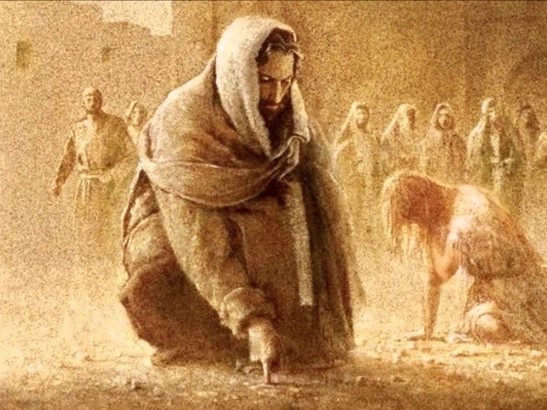
The woman stands before them, trembling. The crowd breathes accusation; the air is sharp with judgment. The law is clear, the verdict inevitable. Yet Jesus does not speak. He bends down. The Son of God, the very Word through whom all things were made, stoops into dust and draws with his finger. Justice kneels.
It is an extraordinary moment of stillness in a scene thick with noise. The religious experts press him for a ruling. “Teacher, what do you say?” They want a reaction, a pronouncement, something to fuel their fury or trap his compassion. But Jesus answers with silence. His refusal to play their game creates a holy hesitation. In that pause, accusation begins to lose its grip.
Why does he stoop? Why not confront them directly, command the crowd to leave, or defend the woman aloud? Why draw on the ground? Scripture does not tell us, but his posture tells us enough. He lowers himself beneath the accused. His hands enter the dust — the same dust from which humanity was formed. The Creator places his fingers into creation again, as if to remind us what justice looks like when shaped by love.
This silence speaks volumes. It exposes the difference between divine justice and our own. Human justice seeks to win; divine justice seeks to restore. Human hands clutch stones; divine hands write mercy. Jesus refuses to match the crowd’s energy of condemnation. He absorbs it instead. In his stillness he protects her. His body becomes a barrier, his presence a shield. The lawgiver stands between the law and its victim.
For the onlookers, this is confusing. The world expects righteous power to roar. Yet the kingdom of God moves differently. Jesus’ hands unsettle both the crowd’s rage and our assumptions about strength. True authority is not proven by how loudly we accuse but by how gently we defend.
There is also something that speaks profoundly to the Salvationist’s heart in this moment — holiness in motion, grace working through embodied compassion. Jesus’ stooping is not withdrawal from justice but its truest expression. Here mercy and holiness meet in action. The silence is not passive. It is the refusal to let law override love.
And so, in that dust-charged stillness, heaven redraws the boundaries of justice. The question is no longer who deserves punishment, but who will stand to protect.
Mercy in the Dust
Aha
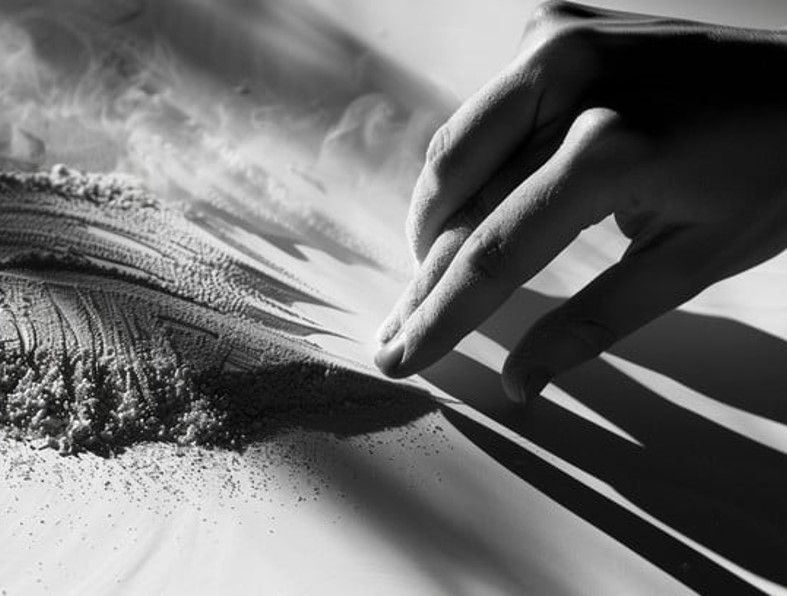
The crowd keeps pressing, still waiting for a verdict. But Jesus stays low. His hands move quietly through the dust. It is the only time in the Gospels that we see him write. The Word who spoke creation into being now writes creation’s redemption into the ground. The same finger that once inscribed the commandments on tablets of stone now inscribes grace on a floor of dust. The medium has changed, but the hand is the same.
No one knows what he wrote, and perhaps that is the point. The message is not in the words but in the gesture. His writing unsettles their certainty. Every line he traces in the earth exposes the hardness of their hearts. The law they wield so confidently was meant to reveal mercy, not to authorise cruelty. Jesus writes, and the accusers are unmasked. They came to condemn a sinner; they find themselves standing under judgment.
Then he stands. The quiet teacher rises to his full height, not to strike or to shout, but to face the crowd. His voice, when it finally comes, cuts through the tension like a blade of light: “Let anyone among you who is without sin be the first to throw a stone.” It is not an argument. It is an unveiling. In those words, holiness reveals hypocrisy. The sentence they demanded is turned into a mirror.
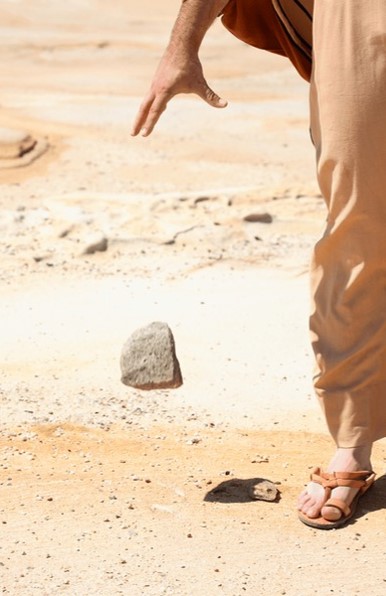
One by one, stones fall. The sound is soft, but the message is thunderous. Justice has taken a different shape. It is no longer about finding the guilty but restoring the fallen. Jesus does not overturn the law; he fulfils it in mercy. His hands have redrawn the lines of judgment.
And still, he remains beside the woman. The others have gone. Only the Defender and the defended remain. The dust settles; the noise fades. He does not condemn, yet he does not ignore her sin either. “Go, and sin no more.” Forgiveness does not excuse; it restores. In this moment, the grace of God bends down to lift a soul.
Here, in the dust, mercy takes form. The law becomes love with skin on. This is what the hands of Jesus do — they write redemption where others would write accusation. They defend without denying, protect without pretending, and restore without erasing truth. The hands that formed humanity now reform it, tracing a new covenant line in the dirt.
When Stones Fall Silent
Whee
The sound of stones falling is one of the gentlest in all Scripture. One by one, they slip from clenched fists and thud softly into the dust. The accusers who moments ago stood tall now shuffle away, smaller somehow, exposed by mercy. No one dares look Jesus in the eye. The storm has passed. Only silence remains — a silence filled not with fear, but with relief.
Jesus straightens. The woman stays where she is, still half-expecting the next blow. But there is none. The one voice left to condemn is the only voice that chooses not to. “Woman, where are they? Has no one condemned you?” Her answer is barely a whisper. “No one, sir.” Then comes the gospel in its simplest form: “Neither do I condemn you. Go, and sin no more.”
This is grace not as theory but as touch — the lived experience of being shielded, defended, and restored. Jesus does not wave away her past, nor does he define her by it. He gives her a future. His words lift her head, his presence restores her worth. Holiness has bent down, and now humanity can stand again.
It is here that the story moves from the page into our own flesh. We know what it feels like to stand accused — by others, by conscience, by memory. We have been the woman, trembling in the dust. And we have been the crowd, stone in hand, justifying ourselves by someone else’s failure. In both cases, we need the same Saviour. The gospel is not only that Jesus pardons, but that he defends. His hands become a shelter against our own self-destruction.
This is sanctifying grace at work — love that not only forgives but reforms. To encounter Christ’s mercy is to be remade for mercy. Those who have been spared become defenders themselves. The stones that once marked our judgment become the foundation of compassion.
When stones fall silent, the Church begins to speak the gospel again — not in condemnation but in defence, not in fear but in freedom.
Hands That Still Defend
Yeah
The story does not end in the temple court. The dust settles, but the pattern of those hands continues. The same grace that bent down in defence now reaches outward through his people. When Jesus returned to the Father, he left his followers not only a message to tell, but a manner to live. We are the Body of Christ, Paul says — which means that the hands of Jesus have not disappeared. They have multiplied.
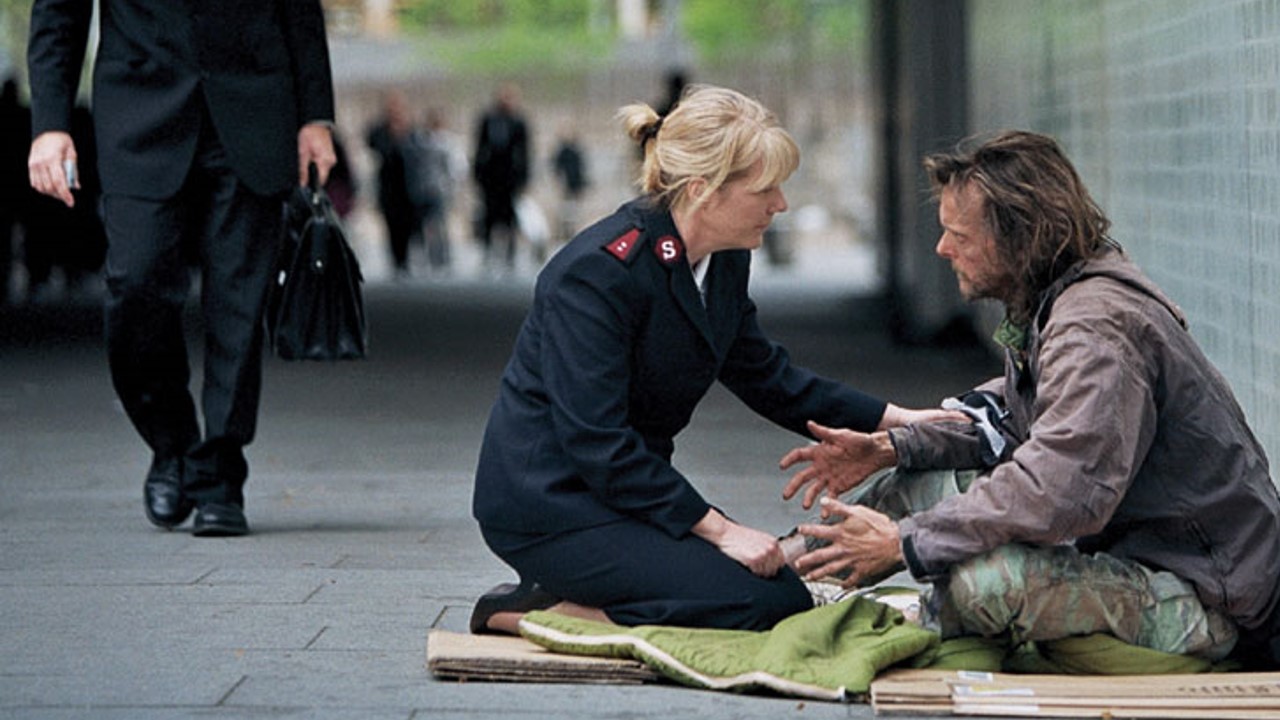
Every time the Church acts to defend rather than destroy, the gospel becomes visible again. The hands of Jesus are at work when a Salvation Army officer kneels beside someone shamed or addicted and shields them from scorn. The hands of Jesus are present when believers advocate for the homeless, speak for the silenced, or challenge systems that crush the weak. They are there in quiet acts of courage — a teacher protecting a bullied student, a neighbour standing between an abuser and their victim, a congregation choosing restoration over rejection. In all these moments, mercy stoops once more into the dust of our world.
Grace in the world looks like this: ordinary hands practising extraordinary compassion. It is holiness with calluses, faith with fingerprints. It is the Spirit of Christ moving us from folded arms to open hands. We do not stand above the fallen; we stand beside them. We do not wield purity as a weapon; we embody it as protection. The measure of our faith is not how quickly we spot sin, but how faithfully we shield the sinner until grace can heal.
This call to defend is not weakness. It is strength submitted to love. Jesus’ hands were strong enough to build, heal, and bear a cross — yet gentle enough to lift a shamed woman to her feet. True power is never in the clenched fist but in the open palm. Justice in the kingdom of God always bends down before it stands up. And when it stands, it stands between the vulnerable and the violent.
Here is where this series finds its heartbeat. The hands of Jesus have touched lepers, blessed children, lifted a sinking fisherman, and now defended the condemned. Each act reveals not only who he is but who we are called to become. The invitation is clear: if we are his body, then our hands are his continuation in the world.
So may we be a people whose touch restores dignity, whose grip steadies the weak, whose fingers trace mercy into the dust of our communities. Let our hands write what our words cannot always say — the good news that grace still defends.
As Jesus’ hands did, so we too must …