Naming the oddness
Opening
When I reached this week in the series, I realised something slightly embarrassing. I could not remember why I had planned to place Gethsemane at the doorway of Advent. It felt odd. Strange. Why begin the season of hope, expectation and waiting in a garden full of anguish and fear. Why guide our attention to Jesus not as a newborn child or a coming King but as a figure bowed in the darkness, wrestling in prayer.
I found myself thinking, is this really where we want to start. Advent is meant to lift us, to draw us toward light and promise. But as I sat with the question, as I returned to this passage, it became clearer that perhaps this is exactly where Advent should begin. Perhaps this night in the garden is not an interruption to the season but its true beginning. Perhaps hope starts in the very place we would have avoided.
So the question stays with us as we read Luke’s gospel today. Why start Advent here. Why begin with Jesus’ hands trembling in prayer. And what does this teach us, in this eighth week of our series on the hands of Jesus, about becoming his hands in the world.

Advent starts in the dark
Movement One
Advent does not begin with brightness. It begins with shadows. It begins with longing and honesty, not celebration. The old Christian calendars always placed the first Sunday of Advent alongside readings that spoke of longing, judgement, vigilance and truth telling. They knew something we often forget. Hope that starts in comfort rarely lasts. Hope that starts in truth can carry you through anything.
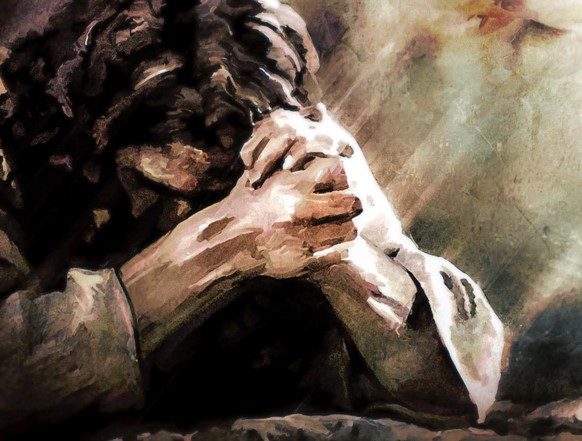
Gethsemane is the truest landscape of Advent because it tells the truth about the world. It is night. The air is cold. The future is frightening. Jesus kneels on ground that feels as heavy as his own heart. His hands clench the soil. His fingers dig at the earth as he prays, “Father, if you are willing, take this cup from me.” He does not pretend. He does not offer polite or polished faith. He prays out of the midnight of the soul.
And that is where Advent begins. In the places where we are waiting for God to act. In the places where the future feels uncertain. In the places where we whisper our fears at night. Advent does not deny the darkness. It declares that God meets us there.
This matters for us. Many arrive at Advent not feeling ready for celebration. There are losses, pressures, unhealed places. There is worry for family or the world. And so it is a mercy that Scripture does not demand we start the season in a place we cannot honestly reach. Instead, it begins exactly where we stand. It begins with a Saviour who kneels in the dark and shows us how to pray there.
His hands in the night are praying hands. And so ours can be too.
The King who reigns by surrender
Movement Two
There is another reason why Gethsemane belongs at Advent. Advent is the season of the coming King. But in Luke’s gospel the King is not recognised by power or splendour. He is recognised by surrender.
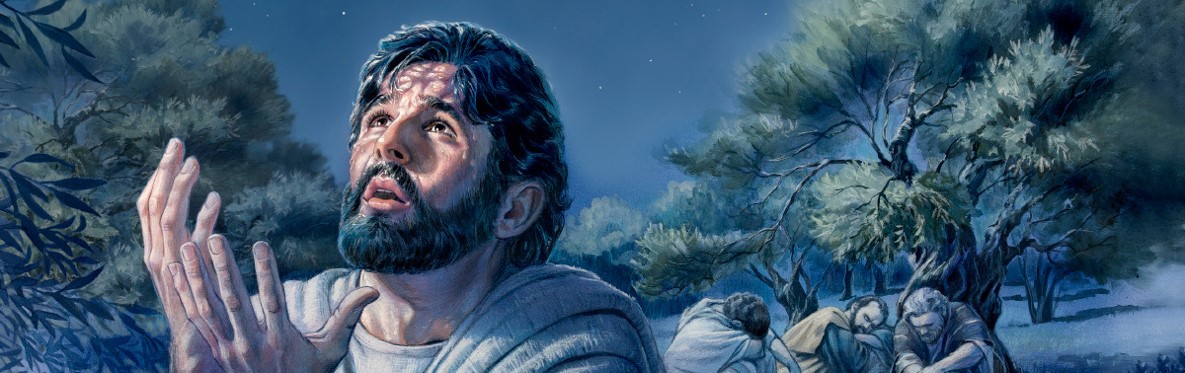
Jesus’ path to kingship does not begin in the courts of Jerusalem. It begins here. In the garden. On his knees. His authority is revealed not in claiming power but in offering himself to the Father’s will. When he prays, “Not my will, but yours be done,” he is not giving in to fate. He is freely offering love. He is stepping into the very heart of his calling.
This is a different kind of kingship. A different kind of rule. The world’s kings rule by grasping. This King rules by opening his hands. The world’s leaders hold tight to control. This King entrusts himself to the Father. In Gethsemane we glimpse the character of the kingdom that is coming: a kingdom shaped not by domination but by self-giving love.
This is why Advent must come through the garden. If we want to prepare for the coming Christ, then we must see him clearly. He does not come into the world with clenched fists but with open hands. He does not seize glory but empties himself. And because his hands are open in obedience, they will one day be open in blessing, healing and welcome.
In this eighth week of our series, we are not turning aside from the pattern of Jesus’ hands. We are seeing the pattern at its depth. The hands that pray are the hands of the King.
The call to watchfulness and prayer
Movement Three
The next reason Gethsemane belongs at Advent lies in Jesus’ words to his disciples. “Watch and pray so that you will not fall into temptation.” These are words for the garden, and they are also the heartbeat of Advent.
Advent is the season when the Church says again and again, “Wake up. Stay alert. Be attentive. Do not fall asleep at the edge of God’s purposes.” We wait not only for the child of Bethlehem but for Christ who will come again. We wait as people who long for God to act in the world and in us.
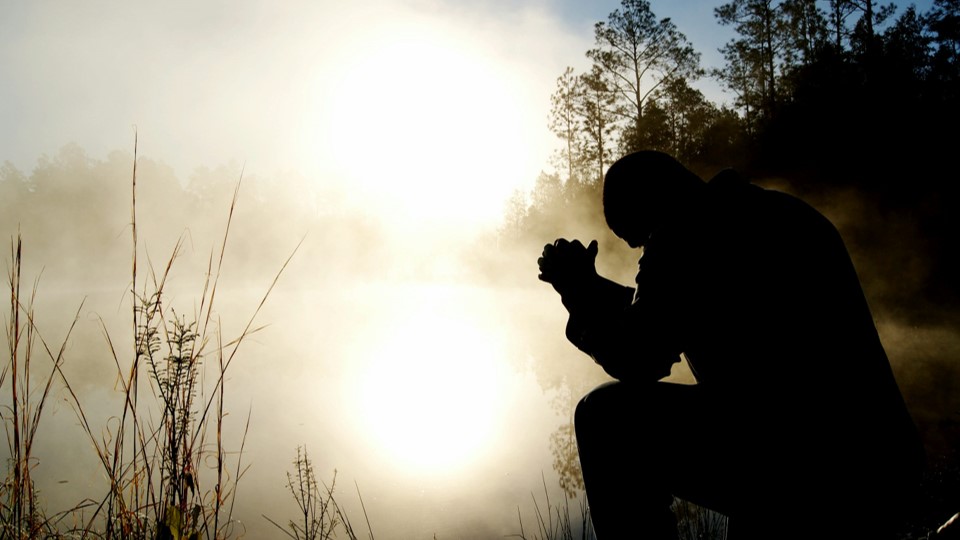
In Gethsemane, Jesus embodies this watchfulness. He stays awake while others sleep. His heart is open even when fear presses in. His hands remain lifted in prayer even as the weight of the world bears down. He keeps vigil for humanity because humanity is unable to keep vigil for itself.
That contrast is painfully honest. The disciples want to stay awake. They want to be faithful. But exhaustion overtakes them. And the moment they most need to be attentive is the moment they drift.
It is a picture of us. Our intentions are sincere, but our attention wavers. We want to pray, but we slip into distraction. We want to stay spiritually awake, but we find ourselves dozing through the very hours when God is closest.
So Jesus watches for us. Jesus prays for us. Jesus stays awake for us. And then he invites us to join him. Advent reminds us that discipleship is not energetic busyness but faithful watchfulness. It is keeping our hands open to God, even when the night feels long. It is learning to pray the garden prayer: “Father, your will, not mine.”
When we learn this posture, our hands become hands of Jesus in the world. Hands that pray before they act. Hands that open before they try to control. Hands that wait upon God as a form of love.
Advent names our world honestly
Movement Four
If Advent were only about cosy anticipation and soft candlelight, then Gethsemane would indeed feel out of place. But that is not the world we live in, and Advent has never asked us to pretend otherwise. It is the season when the Church learns to tell the truth about the darkness while still daring to hope for the dawn.
Gethsemane gives us a language for the honesty of Advent. Jesus prays in a garden at night, and for many of us that imagery is painfully familiar. We know what it is to feel tired to the bone. We know dread that sits in the chest. We know questions that have no neat resolution. We know the sense of being stretched thin and found wanting. The world often feels like a garden at night.
And this is why this passage is not a strange intruder into Advent but a mercy. It meets us where we actually are. It refuses the easy gloss. It shows us that faithfulness is not the absence of sorrow or strain. It is the courage to bring all of it into the Father’s presence.
Jesus’ hands in this moment do not deny the pain. They carry the pain. They hold it before the Father and trust him with it. That is how Advent teaches us to pray: honestly, humbly, without pretending that the world is lighter than it truly is.
And this is where the series itself begins to gather its thread. Throughout this series we have been tracing the story of salvation through the hands of Jesus. Hands that create, welcome, heal, lift, defend, serve, feed. Week after week we have been watching what divine love looks like when expressed in human action. And now, near the end, we see those same hands clasped in prayer.
There is a gentle coherence to this. Prayer is not a break in the pattern. It is the deep root beneath everything else Jesus has done. His welcome flows from communion with the Father. His healing flows from communion with the Father. His lifting, his defending, his feeding, his serving. All of it is sustained by prayer.
If the earlier weeks have shown us what the hands of Jesus do for others, this week shows us what those hands do for the sake of the Father. It reveals the source. Jesus lives from prayer before he lives for ministry. And when the hour of suffering comes, he returns to that primal posture.
This is not simply a poetic idea. It is a theological foundation. Everything Christ accomplishes in salvation history is grounded in his relationship with the Father. That relationship is expressed, deepened and enacted in prayer. So it is no surprise that his praying in Gethsemane is the doorway through which he steps into the work of the cross. Prayer sustains the whole saving mission of God.

Praying hands ready for what comes next
Application
As we stand on the threshold of Christmas, this passage prepares us in a surprising and precious way. Advent does not simply lead us towards the cradle. It leads us through the shadows so that when we finally behold the light, we understand its cost and its glory.
The image of Jesus’ praying hands in Gethsemane is not meant to darken our Advent hope. It is meant to deepen it. The hope of Christmas is not sentimental brightness. It is the hope of a Saviour who willingly entered sorrow in order to redeem it. He prayed his way into obedience so that he could give himself fully for the life of the world.
And it leaves us with a call. This first week of Advent asks whether our own hands will be ready. Ready not only to receive the Christ child but to follow the Christ who prays. To place our fears, our longings, our conflicts and our obedience into the hands of the Father. To let our praying shape our living.
In just a few weeks’ time we will celebrate the birth of the one whose hands created galaxies and held infants and lifted the fallen and washed the feet of friends. But before all that, and before the cross itself, we see those hands clasped in prayer. This is where salvation’s final chapter begins. And it is where our discipleship must begin again too.
Which brings us back to where we began. Why place Gethsemane in Advent? Why set this story here, at the doorway to Christmas?
Because Advent never begins with sentiment. It begins with truth. It begins in the place where hope is costly, obedience is real and love prays with open hands. Jesus shows us that the road to redemption always runs through surrender. His praying hands prepare the way for the saving work that follows.
And that is why this passage belongs here, in this week of Advent. Because as his hands pray, so must ours. As he trusts the Father, so must we. As he brings his whole self into the Father’s presence, so we are invited to bring ours.
So may this Advent begin as it truly should. With honesty. With surrender. With watchfulness. With our own hands joining his, lifted to the Father who hears and who helps and who leads us into life.
May our hands, like his, be ready.