Structure: Comparison (Israel / Jesus & Disciples / Us) A1A2A3,B1B2B3,C1C2C3,D1D2D3,E
We Trust in Strength
A1A2A3
We are, by nature, people who reach for strength. We want to be secure. We want things to be predictable, controllable, graspable. So we build systems to make us feel safe—banks, careers, health insurance, five-year plans. We hang our sense of peace on things that can be measured, managed, and multiplied. Strength comforts us because it promises stability. But it also deceives us. It whispers, “You are untouchable.”
It was like that in the days of Amos. Israel was, at least outwardly, strong. They had enjoyed a period of prosperity and expansion. The cities were full, the altars were busy, and the borders seemed secure. Military confidence was high. Worship carried on like clockwork. The people had numbers, they had pride, they had a sense that they were untouchable—blessed, after all, by the God of Abraham.
But Amos comes with a voice like thunder, announcing a warning: “The city that marches out a thousand strong will return with a hundred. The one that sends out a hundred will return with ten.” (Amos 5:3). The math is bleak. Israel’s illusion of strength was just that—an illusion. Their comfort in numbers would soon become a bitter memory. What looked solid was in fact hollow.
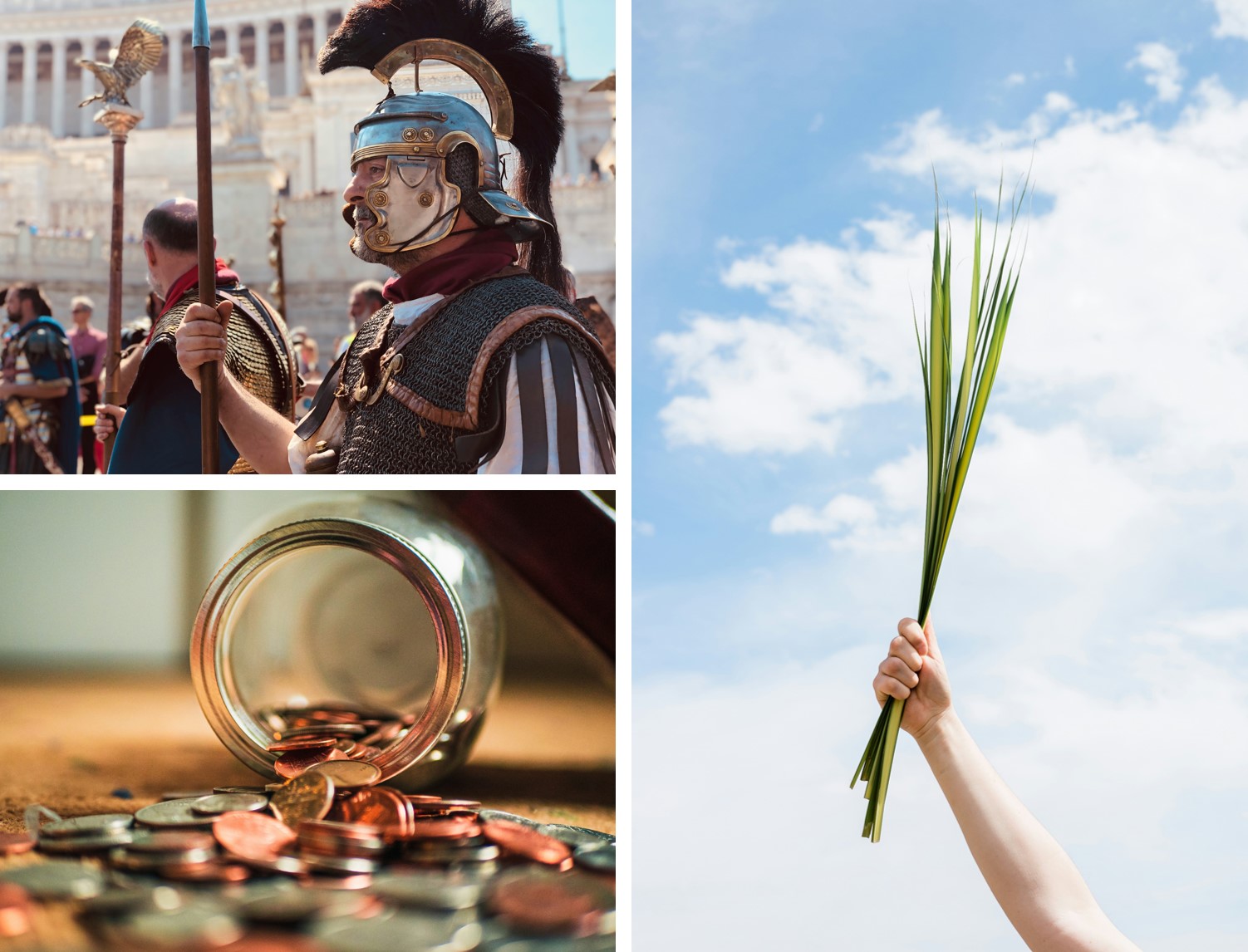
And if we turn to the streets of Jerusalem, just a few hundred years later, we see a strangely similar confidence. Palm Sunday arrives, and crowds line the road. They wave branches and throw down their cloaks. “Hosanna!” they cry—“Save us!” They believe this is the moment of triumph. Jesus has arrived, and surely now He will claim power, crush Rome, fulfil the dream.
Even the disciples are swept up in it. This is what they’ve been waiting for. The miracles, the momentum—it all points to something unstoppable. The Son of David has come to take His throne.
But of course, by the end of the week, the same crowd that shouted “Hosanna” is yelling “Crucify.” Jesus stands silent before Pilate. He does not call down angels. He does not assert His strength. He does not fight. And to the world looking on, it seems like the whole movement—this so-called kingdom of God—collapses into weakness.
Here’s where we find ourselves. We live in the tension between those two stories, and too often, we repeat the same pattern. We trust in what we can build, what we can see, what we can control. We tell ourselves we are strong because our calendars are full, our accounts are steady, our health is fine. We say to ourselves, “This is the life God has blessed me with.”
But the truth is, the things we lean on most can quickly become the very things God will strip away—not out of cruelty, but out of mercy. Because strength, if it becomes our idol, is something God must challenge. And when we trust in our own power, our own momentum, even our own religion, we may find ourselves as blind to collapse as Israel was, or as the disciples were that Sunday when the palms were waving and the crowd was singing.
Easter begins, not in victory, but in a dangerous illusion of strength. It starts with people trusting in what they can see. It starts with momentum and confidence and crowds. But the story will not stay there. Something is coming that will strip all of it away.
And only then will resurrection make sense.
Everything We Lean On Can Be Taken
B1B2B3
There’s a moment in every story when the scaffolding falls away.
In Israel’s story, Amos is that moment. The prophet walks into their national confidence and announces: “This strength you trust? It won’t save you. In fact, it’s the very thing God will tear down.” A thousand soldiers sent out—only a hundred return. A hundred go out—just ten come back. It’s not a slow erosion. It’s a collapse. Swift, shocking, and unavoidable.
God is thinning them. And not because He hates them. But because they’ve come to trust in the wrong things: their numbers, their security, their status as the “chosen.” They thought their religion would protect them—weekly sacrifices, the right language, the right rituals. But God saw underneath. And what He saw was a people propping themselves up on appearances, not surrender. So He begins to strip away their strength, to bring them to their knees—not to harm them, but to wake them.
And isn’t that what happens to us, too? We think we’re steady—until the layoff comes. Until the diagnosis. Until the fracture in the marriage, the silence after prayer, the news that changes everything. We don’t know how much we were leaning on our own scaffolding until it’s taken. We assumed we were strong. Then life thins us out. And in that thinning, the illusion cracks.
It happened to Jesus, too—though, of course, not because He was deluded. He walked willingly into the moment of collapse. Gethsemane was the beginning: friends asleep, sweat like blood, the prayer: “Take this cup from me—yet not my will…” Then comes the arrest. The betrayal. The sham trial. The silence before power. The mocking. The cross.
For the disciples, it looked like failure. Total collapse. Their hopes weren’t just wounded—they were executed. The man they’d left everything for was now hanging, naked and powerless, on a Roman instrument of death. All that power they thought He had—gone. All their dreams of revolution and victory—gone. And they scatter. They disappear into locked rooms and backwater towns, scared and ashamed.
From the outside, it looks like everything has failed.
But maybe—maybe this is exactly where resurrection begins.
Because what if the collapse isn’t the end? What if the silence of God isn’t abandonment, but preparation? What if, before God can raise something new, He first has to strip away the old?
That is what Amos was trying to say: “Seek the Lord and live.” Seek the LORD! Not your military, not your rituals, not your status. Seek Him. The collapse isn’t the end—it’s the summons.
And for us? Maybe we feel like the ground is shifting beneath us. Maybe something we leaned on is no longer there. Maybe we feel, like the disciples, that all we hoped for has been nailed down and buried. But what if this thinning—this reduction—isn’t proof that God has abandoned us? What if it’s the space He creates so that resurrection can enter?
God is not afraid to empty us. Because empty is where He begins.
Divine Reversal
C1C2C3
At this point in any normal story, we would expect an ending. Israel’s collapse is complete. The disciples are scattered. The Messiah is crucified. All that stood tall has fallen. The temple of strength has been emptied.
And yet—something stirs in the silence.
The shocking thing about the God of Scripture is that He rebuilds. Not in spite of collapse, but through it. The empty spaces are where He plants resurrection.
Israel, for all its failure, is not written off. Amos, for all his warnings, still speaks God’s hope. “Seek me and live,” God says in Amos 5:4. It’s not a punishment, it’s a plea. After all the unravelling, God still holds out His hand. But the people don’t see it—because they’re looking for something that makes human sense. They want stability, strength, success. God offers transformation. And to them, it looks like weakness.
That’s what the disciples missed, too.
Even though Jesus had told them—again and again—that death was coming and resurrection would follow, they still couldn’t see past the logic of the world. When He died, they thought the story was over. Messiahs don’t get crucified. Kings don’t lose. Gods don’t die. Their minds had no room for divine reversal.
But then… Easter morning.
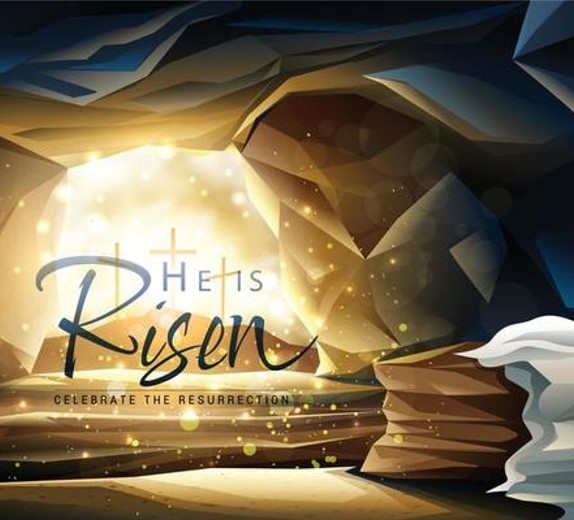
The stone is rolled away. The tomb is empty. The one they saw dead now walks again—transformed. Not resuscitated, not restored to what He was, but risen in glory, changed, victorious through surrender.
It is not the logic of this world. It is the logic of God’s Kingdom.
Resurrection does not mean we get back what we lost. It means we get something deeper than we could ever have imagined. Not a reversal of death—but life from it. A complete inversion of expectation. A holy disruption.
And this is where it gets close to home.
Because many of us live from time to time in that same space the disciples were in. We feel like we’ve hit the end of our stories. Maybe something has collapsed—our confidence, our career, our health, our relationships, even our faith. We look around the ruins and assume it’s over.
But resurrection starts where logic ends.
God isn’t waiting for us to be strong again. He’s waiting for us to be open. He’s not asking us to climb back to what we were. He’s inviting us into something new.
This is why Easter matters—not because it cancels death, but because it transforms it. Not because it denies our collapse, but because it plants hope right in the heart of it. God’s reversal doesn’t ignore the cross. It flows through it.
So what if your greatest emptiness is not your end—but your beginning?
What if the place where everything fell apart is the very place where something deeper, truer, eternal begins?
The cross did not end the story. It opened the tomb.
And from that tomb, the world was changed forever.
God Builds New Life from What Remains
D1D2D3
What God starts in emptiness, He doesn’t abandon.
Easter isn’t just about the moment Jesus walks out of the tomb. It’s about what happens next. Because resurrection was never meant to be a solo event. It was always meant to spread.
But here’s what’s strange: it doesn’t spread through strength. Not through legions of angels or thrones of gold. It spreads through the remnant. Through the little that’s left.
Let’s go back for a moment to Israel. Amos paints a sobering picture: a nation once full of warriors now reduced to a mere handful. “The city that marches out a thousand will have only a hundred left,” he says. It’s not just about military defeat. It’s about God thinning what they trusted, so they might see clearly again. And in that thinning, a question: will what’s left be enough?
It could have been. God was calling them — not to return to power, but to return to Him. Not to rebuild their empire, but to re-centre their identity. But they didn’t take the invitation. The remnant stayed scattered. The revival never came. The tragedy wasn’t the thinning. The tragedy was that they couldn’t see what could still grow.
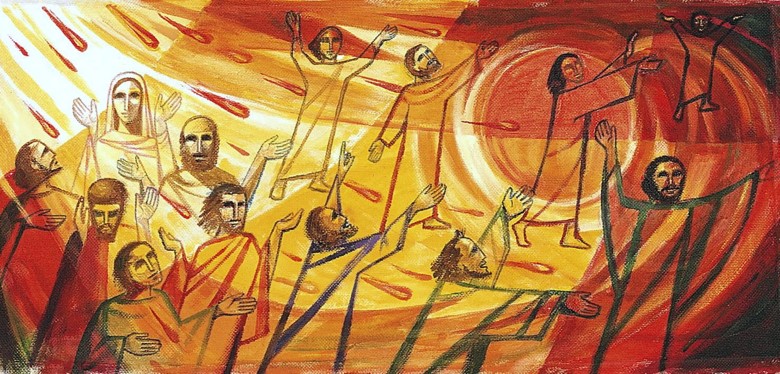
But the disciples — broken, scared, uncertain — respond differently. After Easter, Jesus doesn’t appear to crowds first. He appears to the few. He appears to the fearful. To the doubters. The wounded. The ones who ran. And from those fragile, flawed followers — something unstoppable begins. Twelve, then seventy, then hundreds, then thousands. Not because they had power. Not because they had confidence. But because they had seen the Risen Christ. And He gave them His Spirit.
The Church wasn’t launched from a platform of strength. It was born out of fear and failure, then set ablaze by grace. God took what remained — and remade the world.
And so we come to us.
Because sometimes that’s what life feels like. Picked over. Thinned out. A fraction of what it was. Maybe you been there: feeling like your strength is gone. Your hopes have shrunk. Your faith has been reduced to a flicker. Maybe you’ve lost things that once defined you — relationships, opportunities, even belief in what used to make sense.
And still, God says: what remains is enough.
You don’t need a thousand to start again. You don’t need all your old certainty to believe. You just need the remnants. The mustard seed. The flicker of hope. That’s all God needs to light resurrection.
The risen Christ didn’t appear in palaces. He appeared in locked rooms, on dusty roads, on lonely shores — to people like us, wondering if they still had anything left.
And He gave them what they never imagined: a Spirit, a mission, a world-changing purpose.
Easter says that what looks like the end is never the end. What feels like weakness might be God’s strength. What you have left — however small — may be the beginning of something eternal.
Arise
E
So what if, this Easter, God isn’t asking you to rise in triumph — but to rise in trust?
Not in power, but in surrender.
Not to return to what was, but to step into what might yet be.
Because He is risen — and He still builds life from what remains.
So perhaps this Easter, the invitation is simple.
Not to gather up strength, but to lay it down.
Not to pretend all is whole, but to offer what remains.
Because resurrection doesn’t need perfection. It just needs surrender.
In the thinning, God is still present. In the silence, Christ still speaks. And in what feels like defeat, the Spirit is already stirring new life.
So if your soul is weary, if your strength feels small, if hope flickers faint — then fix your eyes, not on what is lost, but on the One who lives.
Turn your eyes upon Jesus.
There, in His face, is all that we need.