Every Sunday, we gather to worship. And every Monday, we scatter into our lives. But what if our worship is not defined only by what we do in this sacred hour, but also by what we carry—both into this place and out of it?
Amos the prophet confronts us with a sobering image: a people who, though meticulous in their sacrifices, unknowingly lug their idols into worship. They carry their devotions to other gods—Sakkuth and Kaiwan—right alongside their offerings to the Lord as they enter. And they fail to carry justice and righteousness with them as they depart. And so, we ask two questions today: What do I carry into worship from Monday to Saturday? And what do I carry out of worship into Monday to Saturday?
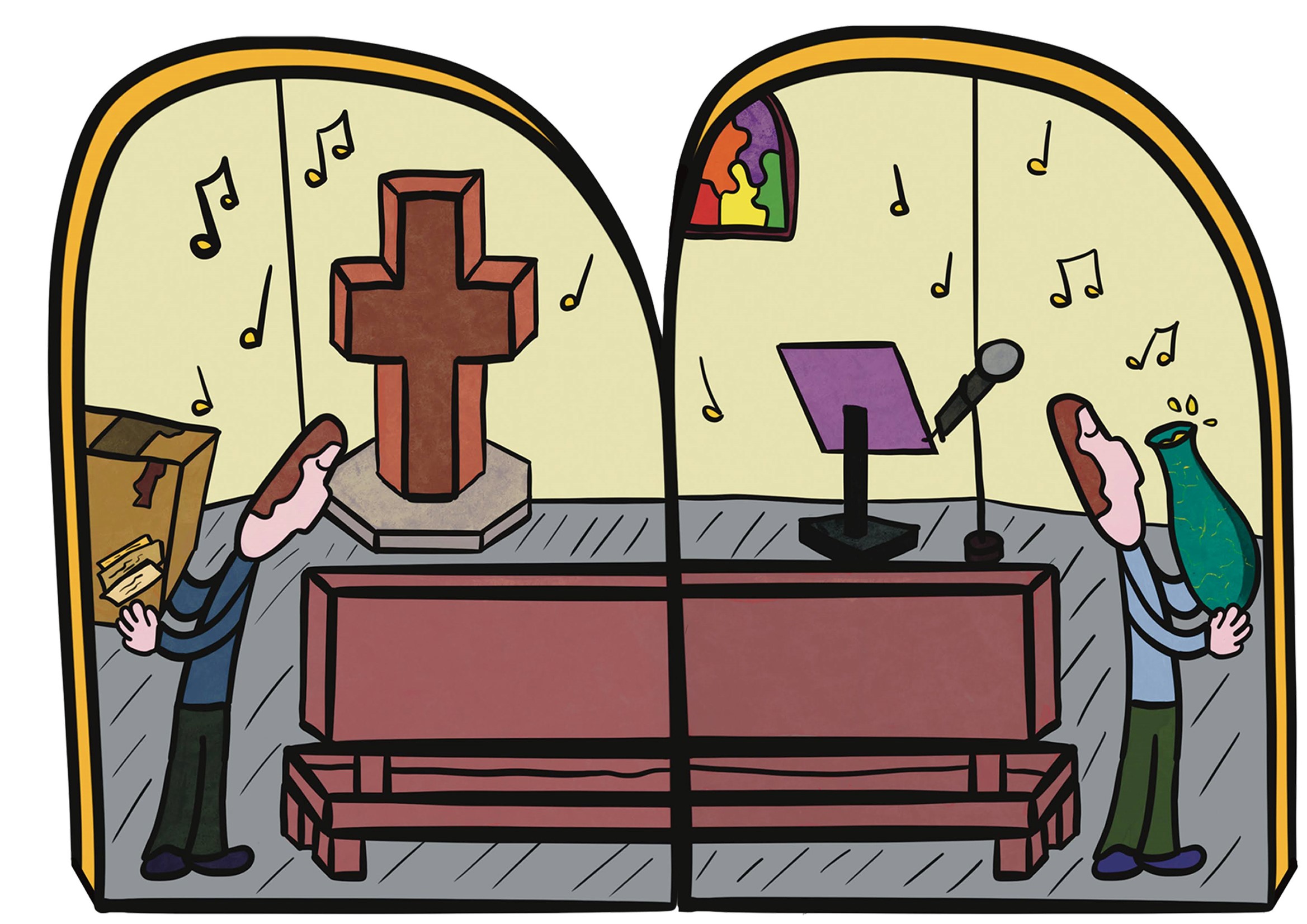
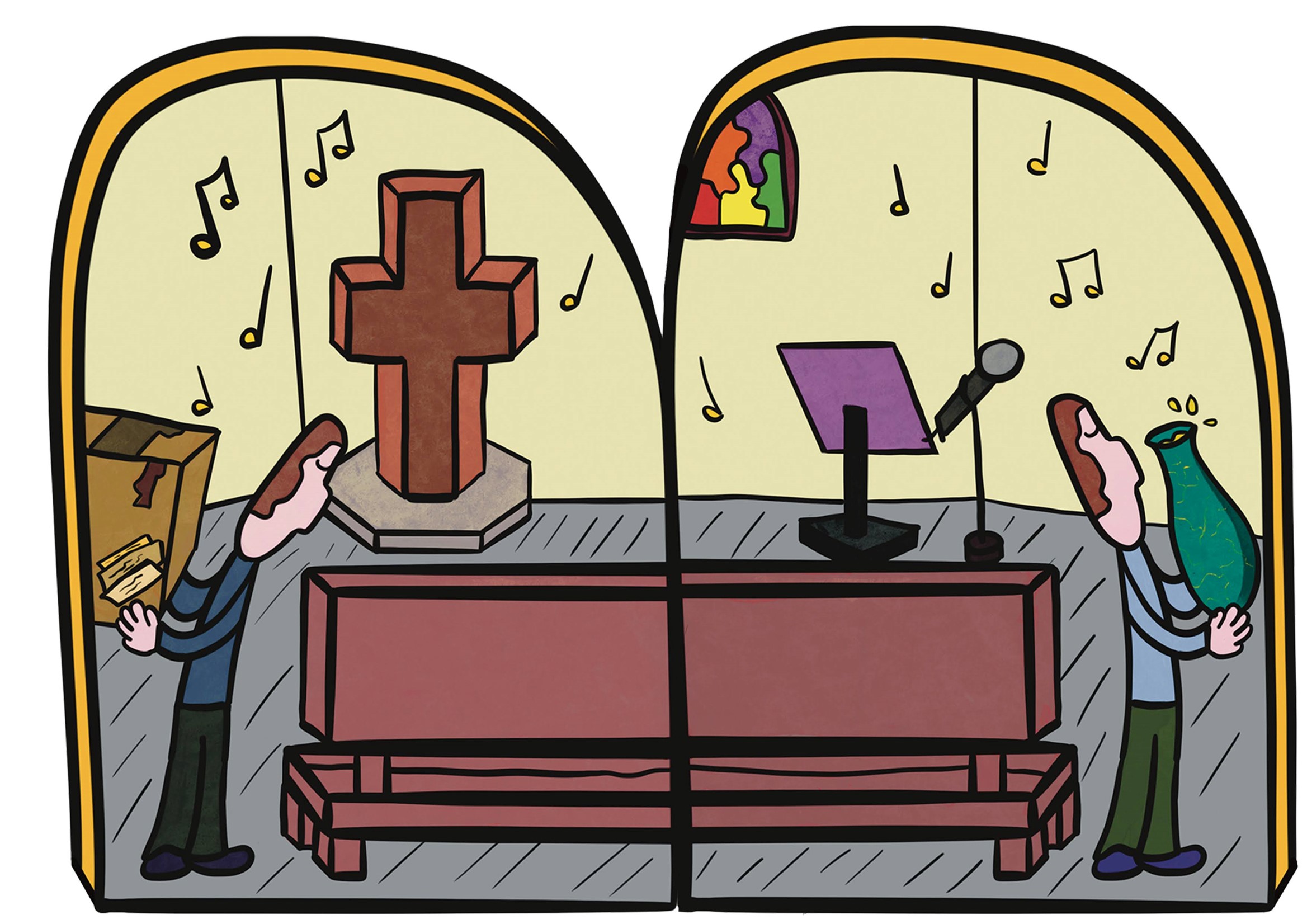
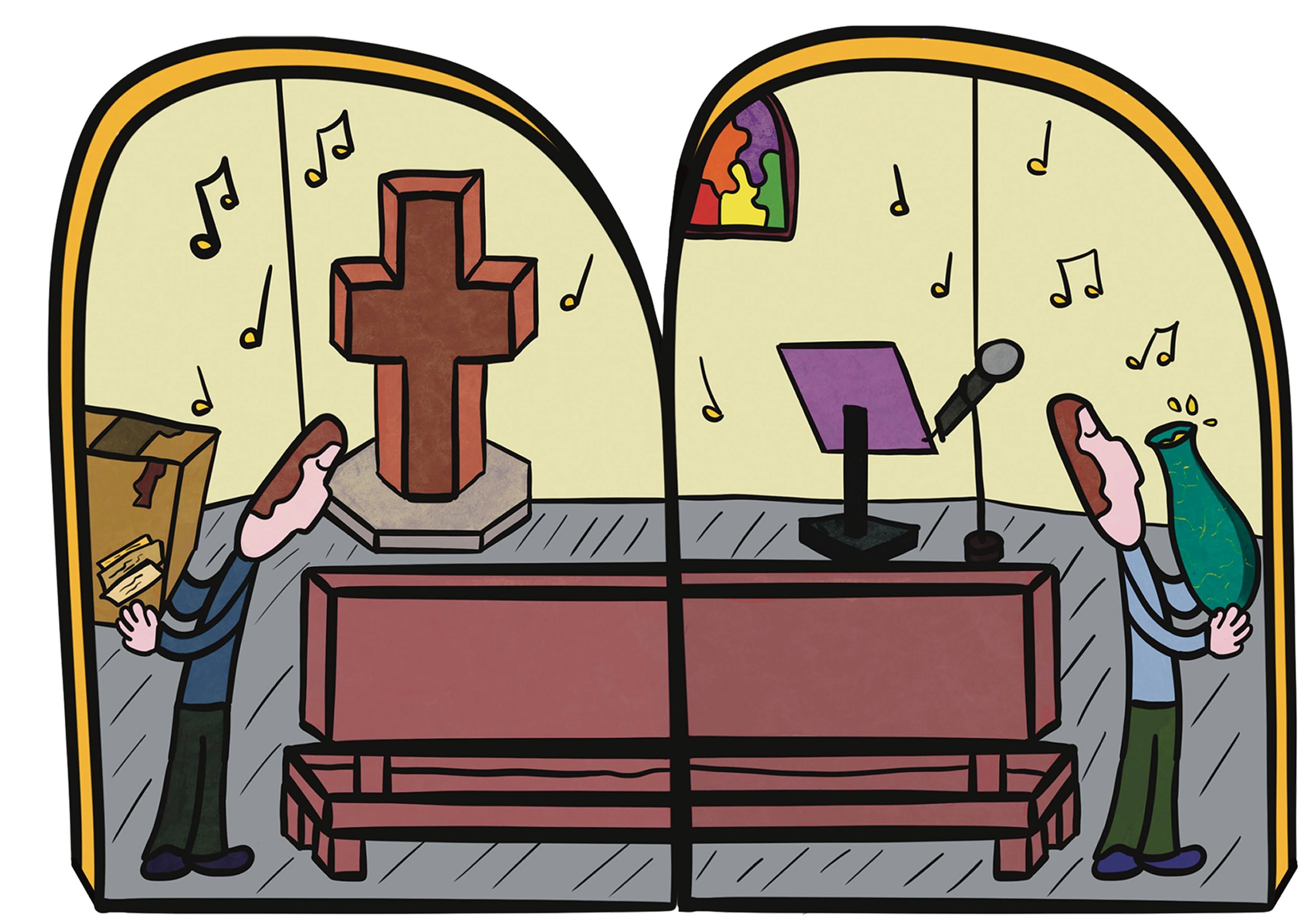
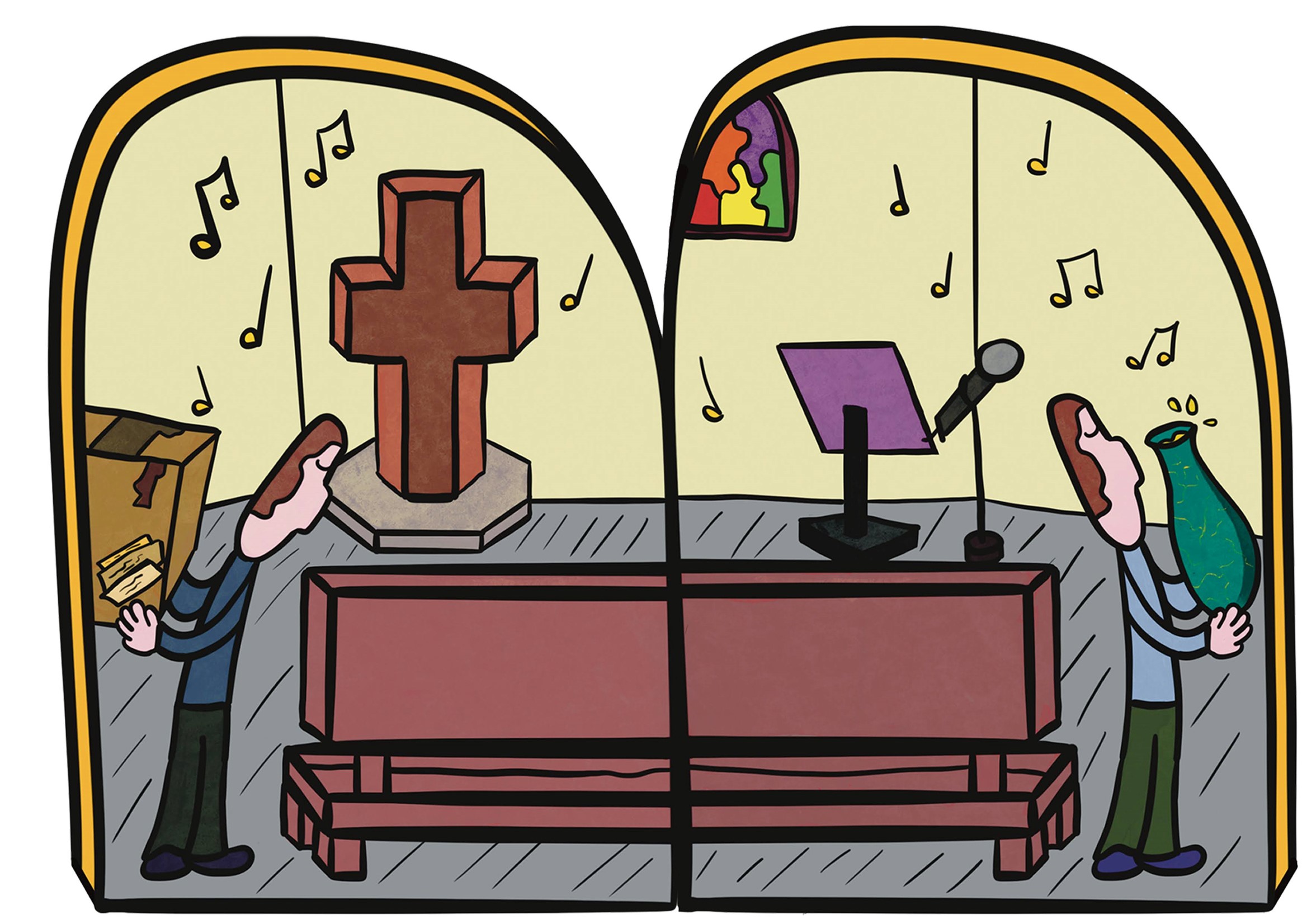
To explore them, I want you to picture an ancient diptych—two painted panels, hinged together like a book. In the Middle Ages, they were devotional objects. You opened them to pray, to contemplate, to see two halves of one sacred story. Today, we open such a diptych—figuratively—but with no less reverence.
In the first panel, we see ourselves as we enter this space—perhaps weary, distracted, hopeful, or burdened. In the second, we glimpse ourselves as we leave—perhaps transformed, perhaps not. Either way, both scenes speak truth.
This is not just about Amos’s Israel. It’s about us—our hearts, our habits, our worship.
So we open the diptych. We look inward, outward, and Godward. We dare to ask, not only what we are doing here today, but what we have brought in—and what we are taking with us when we go.
What Do I Carry In To Worship?
Panel 1
Imagine yourself arriving at a physical church on a Sunday. You take your place in a pew, greet a few familiar faces, and begin to settle in. But before the first song is sung, before the first prayer is spoken, you notice what you have placed next to you along your pew and round your feet — all the things that you carried through the door. Not just your coat or your phone. Something weightier.
Amos calls out to a people who thought they were bringing offerings—when in fact, they were bringing baggage. Hidden among their grain offerings and songs of praise were the idols they had learned to live with: Sakkuth, the god of the harvest; Kaiwan, the god of destiny. Their acts of devotion were compromised—shared with the gods of the nations, shared with their own ambitions, fears, and securities. And here's the sting: they carried these idols into worship. They didn't abandon them at the door. These were not relics from a faraway people—they were part of the everyday cultural mix. The gods of security, success, and control. And while the people of Israel may not have even realized it, their worship was crowded. Not by noise, but by allegiance.
What might that look like today?
Perhaps we carry in our self-sufficiency—a week full of independence, with little prayer or dependence on God. Or our bitterness—grudges held tightly against neighbours, spouses, or coworkers. Or our vanity—the subtle desire to be seen, praised, or admired even in the house of God.
We do not bring golden statues, but we do bring invisible thrones—where our comfort, our control, or our pride still rule. In other words: the shrine of our king. The pedestal of our idols.
We carry our calendars—the frantic rhythm of the week still pulsing in our minds. We carry our ambitions, our anxieties, our regrets. We carry the news headlines and the private battles. None of these are wrong to bring into the presence of God—in fact, God longs to meet us in them. But the danger Amos identifies is subtler: we begin to carry these things not as offerings to surrender, but as idols to protect. We bring our workaholism, and secretly fear God will disrupt it. We bring our opinions, and silently resist any Word that might challenge them.
Worship becomes an add-on, a ritual rather than a reorientation. And slowly, without ever saying so, we become people who live as if God can be boxed into Sunday.
To enter the presence of God rightly, we must first be willing to look at what we’re holding. And not all of it will be bad. Some of it will be deeply good: our longing to belong, our prayers for loved ones, our hunger for truth. But even these, if not offered up, can harden into demands. They can become the very things that prevent us from hearing God’s voice.
Imagine a worshipper, like Israel, bringing a spotless lamb to the altar, but dragging behind them a cart laden with stone gods. It’s absurd, isn’t it? And yet it’s possible. We come forward with praise on our lips, but what is hiding in our hearts?
There’s a telling question Amos never records the people asking: “What does God see when we worship?” They were too focused on what they were offering. But the prophets—and Jesus after them—were always more concerned with the condition of the heart behind the offering.
Here, Amos asks: What does your Monday-to-Saturday life reveal about what you're carrying on Sunday? This is the uncomfortable gift of Amos: he forces us to face our double hearts.
So today, we must ask:
And so, today, before we move to the second panel, we pause and look honestly at the first and ask ourselves its question: What gods am I carrying into the presence of the true God? Do I worship with clean hands—or with full arms?
What Do I Carry Out Of Worship?
Panel 2
We have opened the first panel and seen what we carry in—the cluttered loyalties, the unsurrendered fears, the competing gods. Now we turn to the second panel. And the question shifts: What do we carry out of worship?
If what we carry into worship exposes our hidden allegiances, then what we carry out of worship reveals the authenticity of our encounter.
Worship is not simply a refuge from life—it is a rhythm that forms life. It should prepare us to return to our daily world with new clarity, new humility, and new resolve. So the question is: What sticks? What survives the Sunday-to-Monday transition?
Earlier in this chapter, Amos says: “Let justice roll on like a river, righteousness like a never-failing stream.” (v. 24) That’s what God wants to see flowing out of worship. Not noise. Not formality. Not a lingering spiritual high. But justice. Right relationships. Clean hands. Generous hearts.
Real worship is not judged by how it feels in the moment, but by how it spills over into the week.
If I sing “I surrender all” on Sunday but walk into Monday grasping for control, have I worshipped?
If I proclaim “God of justice” on Sunday but exploit or ignore the vulnerable on Wednesday, what has that worship achieved?
In Amos’s time, worship had become a closed loop—rituals recycled, sacrifices repeated, songs sung with conviction but disconnected from action. And so God thunders through the prophet!
The people of Israel carried their worship no further than the temple gates. The fragrance of their offerings did not reach their marketplaces. Their songs did not echo in their streets. Their praise did not translate into compassion for the poor or truth in their dealings.
What God desired was not more worship—but worship that overflowed.
This is the danger that faces every church in every generation: that we begin to think worship is something that ends with the final hymn. That it is something contained within the sanctuary, boxed into the “God slot” of our week. But the true test of worship is not what we feel in the sanctuary, but what flows from us when we leave it.
What, then, are we meant to carry out? Not our bulletins, not just the blessing—but justice. Righteousness. Mercy. A heart that has been re-ordered by encountering God.
We are meant to walk out not merely with more knowledge, but with a different posture. Not just with more comfort, but with more conviction. Not just feeling good, but prepared to do good. The words of Amos remind us: if worship doesn’t touch the poor, if it doesn’t challenge injustice, if it doesn’t change how we speak, work, give, and serve—then it has not touched us deeply enough.
Amos doesn’t condemn worship; he condemns worship that is severed from life.
The second panel of the diptych confronts us with a challenge: after the benediction, what remains of what we’ve just done here? Does the river of praise turn into a stream of righteousness, or does it dry up when we leave? Are we carrying Christ into our conversations, or leaving him behind in the sacred space we formed together?
This panel is not about perfection—but about intention. About integrity. About letting worship become the starting point, not the end point, of our discipleship.
The call of Amos is not simply to feel sorrow for sin, but to live repentance. To not only sing, “Lord, have mercy,” but to become people through whom mercy flows. To live as though the God we met on Sunday still reigns on Monday.
Sunday is not a sealed box, it is a training ground. We don’t come just to meet with God—we come to be re-formed by him. And then be sent out. To leave this place carrying God’s character aloft – carrying his mercy, his patience, his vision for a renewed world aloft and on full glorious display.
Closing
Closing
We have opened the diptych—stood before its two panels. In one, we have seen ourselves as we enter the place of worship: full of mixed motives, unexamined loyalties, and unspoken fears. In the other, we have glimpsed who we might become as we leave: those who have truly met the living God and now walk differently, speak differently, live differently.
Now, the diptych closes. But not as something finished or shelved. It closes, as all true devotional works do, to travel with us. Like a locket kept near the heart, like scripture stored in the soul, it shuts only to be carried forward—into Monday, into conversations, into decisions, into prayer.
When we close the diptych of this day, we do so not forgetting what we have seen, but sealing it in. We remember the idols we are tempted to carry in. We remember the justice we are called to carry out. And we commit, not to a perfect week, but to a faithful one.
This closing is not an escape from reality but a re-entry into it—with our hearts better aligned. Like Israel, we too are prone to compartmentalise. But God is not confined to temples or tabernacles, to one day or one song. He walks beside us through emails and errands, through hospital rooms and school gates, in the silence of early mornings and the chaos of late nights.
So what do you carry now?
Not shame, if your idols have been exposed. But grace. Not guilt, if your justice has been lacking. But a summons.
Carry out the memory of God’s presence.
Carry out the call to justice that rolls like a river.
Carry out the hope that worship can shape a life, not just a liturgy.
You are sent not just with a benediction, but with a commission.
Worship does not end. It begins again—with every act of kindness, every choice to forgive, every truth told, every burden shared.
And as the panels of the diptych close, may they leave an imprint on your soul—framing your week, forming your heart, and reminding you:
True worship always opens us to God—and then opens us to the world.
[REPEAT FOR NN=02, 03, ... WITH UPDATED IMAGE_SRC AND ALT]