Most of the time, we live with the quiet assumption that we’re more or less in sync with God’s will.
Not perfect, of course. But generally aligned. We’re doing our best. We’re not like those people. We believe the right things. We try to be kind. We go to church. We keep things upright … don’t we?
And yet, think about how often we rely on our instincts to tell us if something is “straight.” Hanging a shelf, driving without checking the map, eyeballing a recipe; we trust our sense of things. “Looks fine to me.” “Feels about right.”
We do the same with faith. We assume alignment without ever checking. We listen for what confirms our angle. We look sideways to compare ourselves with others. We live as though sincerity equals accuracy. And so we walk on, convinced the walls we’re building are solid and square.
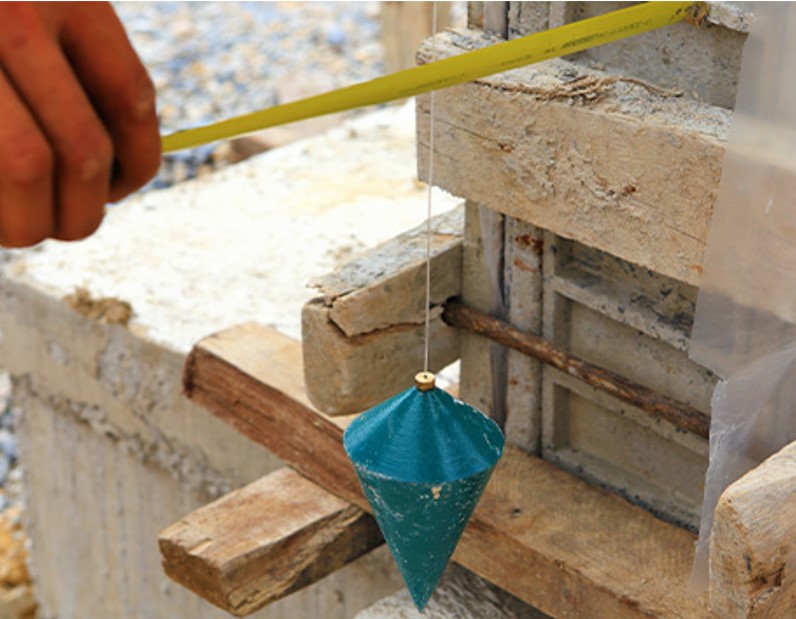
Until the plumb line drops.
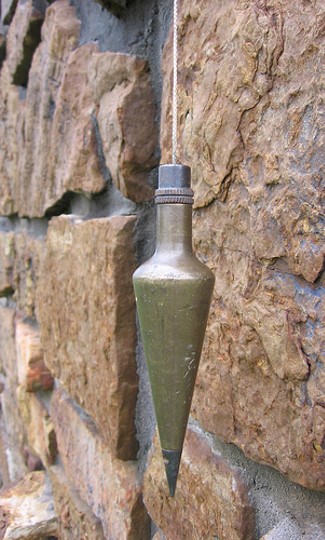
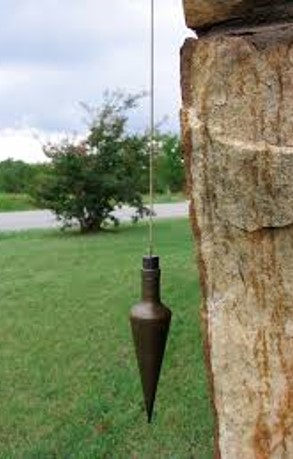
God’s plumb line doesn’t argue. It doesn’t shout. It simply reveals. A standard held beside the structure. A quiet truth next to our constructed confidence.
And suddenly the lines we thought were true are bending. The beliefs we’ve leaned on are tilting. The priorities we were proud of don’t quite reach level. It’s disorienting; but it’s also revealing.
The problem isn’t malice. It’s assumption. The kind that grows quietly, generation after generation, until God gently lowers the line and shows us what we’ve stopped asking: Are we really aligned with Him?
But God Doesn’t Adjust the Line
Ugh
We live in a world that constantly redraws the lines.
One generation's shame is another's virtue. Convictions melt into preferences. What was once obvious is now “problematic.” We talk about “my truth” and “your truth” like competing playlists, each custom-curated to suit the mood. So when God drops a plumb line—a real one, unwavering and unbending—it’s jarring. Maybe even offensive.
Because deep down, we want God to adjust to us.
Not overtly, of course. We still want God to be just and holy… but also flexible. Empathetic. Open to reinterpretation. We want God’s truth to stretch like elastic, enough to wrap around our values without squeezing too tightly. And when it doesn’t—when God’s standard confronts what we’ve baptized as acceptable—we squirm.
Why should God's way still apply in this culture?
Why shouldn’t the standard shift with the times?
Why does it feel like God is against progress?
And if we’re honest: why should anyone—God included—get to measure me?
That’s the ache at the heart of this moment in Amos. God doesn’t accuse Israel of rebellion here. He doesn’t need to. He just shows them the line. And it’s enough to expose everything. What they celebrated, God sees as slanted. What they trusted, God sees as unstable. What they thought was faithfulness, God sees as drift.
God’s plumb line doesn’t budge because God’s character doesn’t bend. It’s not cruelty: it’s constancy. But constancy feels like cruelty when you’ve grown used to tilt. When the world slants and wobbles and you’ve learned to walk with a lean, standing straight can feel like a rebuke.
So we resist. Not out of hatred—but out of discomfort. We resist being measured by anything outside ourselves. But without a standard beyond us, we’re never challenged, never changed. And we never realize just how far we’ve drifted… until the line drops beside us.
The Line as Love
Aha
Then comes the shift—not in the line, but in how we see it. The plumb line isn’t a weapon. It’s not dropped to humiliate or condemn. It’s a mercy.
Because what if the real cruelty would be no line at all? What if God just left us to guess at what's true? What if tilt became normal, distortion became permanent, and no one ever showed us otherwise?
God’s standard is not an attack—it’s a kindness. A fixed point in a spinning world. A way to know what’s upright, even when everything else leans. It doesn’t accuse; it reveals. It doesn’t shame; it shines.
The line says:
Here is what’s real.
Here is what aligns with my heart.
Here is a life that lasts.
And suddenly, it’s not just judgment … it’s invitation. Not: Look how crooked you are. But: Come stand straight beside me.
The plumb line is truth in love. And love always tells the truth.
The Gift of a Line That Holds
Whee
There’s a quiet relief in discovering we don’t have to invent the truth. We don’t have to keep up with every new angle, trend, or shifting definition of what’s right. We don’t have to guess which way is upright, or endlessly measure ourselves against each other’s ever-changing expectations. God’s standard is steady. And that steadiness is freedom. We are no longer tossed about by culture’s tides or tangled in self-made criteria. The plumb line frees us from the exhausting burden of performing our own righteousness—or pretending we have none at all. We’re invited to live aligned. Not perfectly, but intentionally. Not to prove something, but to live truly.
God’s unchanging line steadies communities too. It tells the church who we are—not by branding, or relevance, or comparison—but by our closeness to Christ. It gives us something better than preference or pressure: it gives us “plumbness”.
And because the line is set by love, we don’t need to be afraid of where we’ve tilted. We can repent, realign, and start again—without shame.
This is the gift: clarity instead of confusion. Orientation instead of spin. Truth that doesn’t shift with the wind.
We are no longer building by guesswork.
We’re building beside a line that won’t move … and with a God who won’t either. Because he doesn’t need to: because He IS love.
Let the Wall Be Rebuilt Straight
Yeah
The plumb line still stands. And more than that—God still stands beside it.
Amos’s vision wasn’t just about measurement—it was about presence. “The Lord was standing beside a wall built with a plumb line, with a plumb line in his hand.” The God who measures is also the God who stays.
That’s our hope and our calling.
We don’t walk away from the misaligned bricks of our past. We examine them. We acknowledge where things are leaning, where structures we’ve built—personally, collectively—don’t quite stand true. And then, by grace, we begin again.
The invitation isn’t just to feel convicted… it’s to be recalibrated. To let God’s measure reshape us, not with shame, but with purpose. In your own life: what needs realigning? What habit, attitude, or priority has leaned so long it feels normal? Lay it alongside the line.
And for us as the church: what are we building? Is it straight? Is it strong? Is it aligned with the Spirit’s leading, or our own preferences?
Let’s be the people who don’t fear the plumb line, but welcome it.
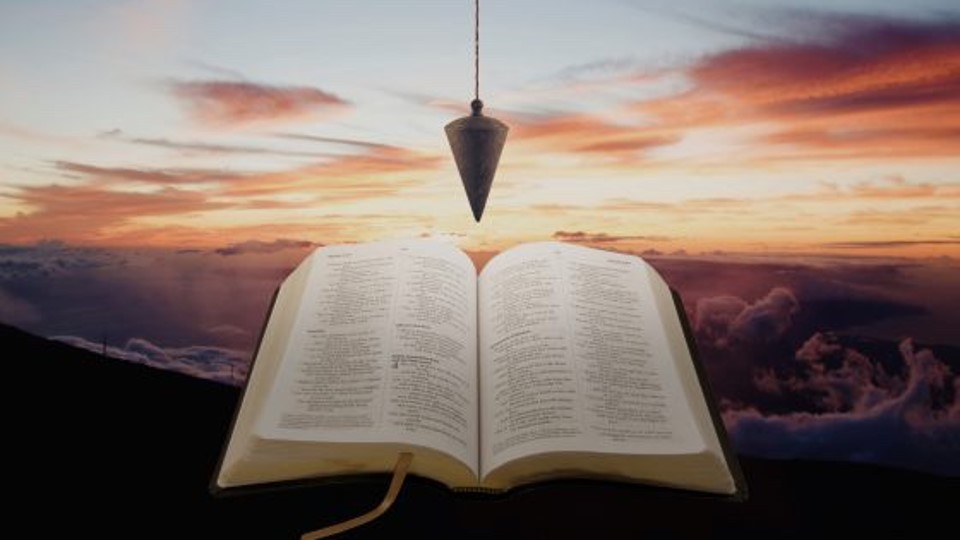
Let’s rebuild our households, our communities, our worship, and our witness—not by our instincts or opinions—but by the enduring measure of God’s Word and God’s love.
It won’t always be easy. But it will be true. And that truth will hold.
The wall can be rebuilt straight.
Because the line still stands.
Because He still stands beside it.
Because He doesn’t need to move.
Because He IS love.