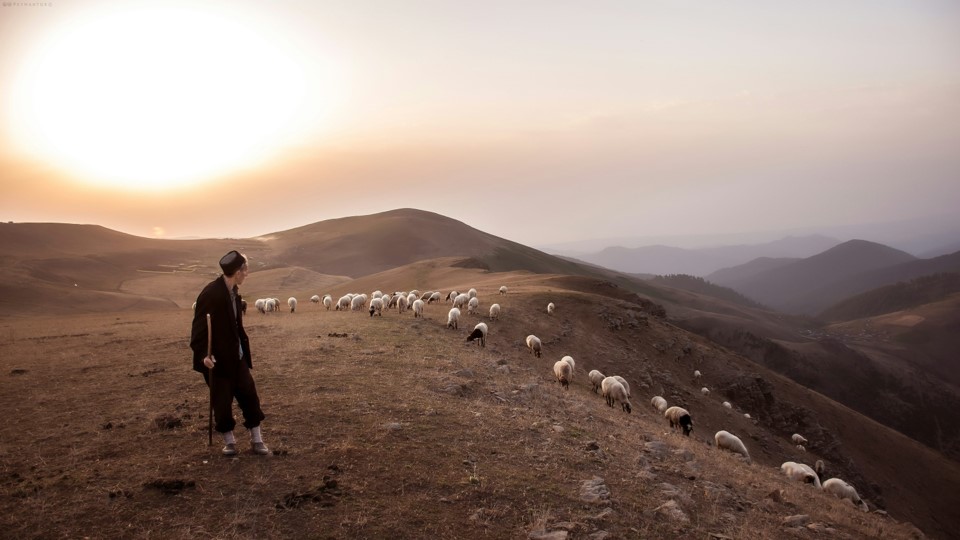
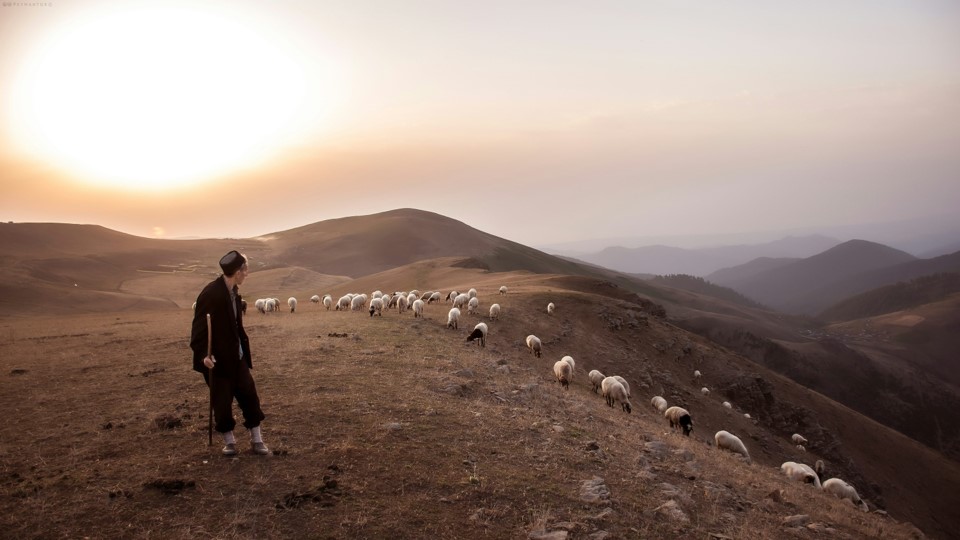
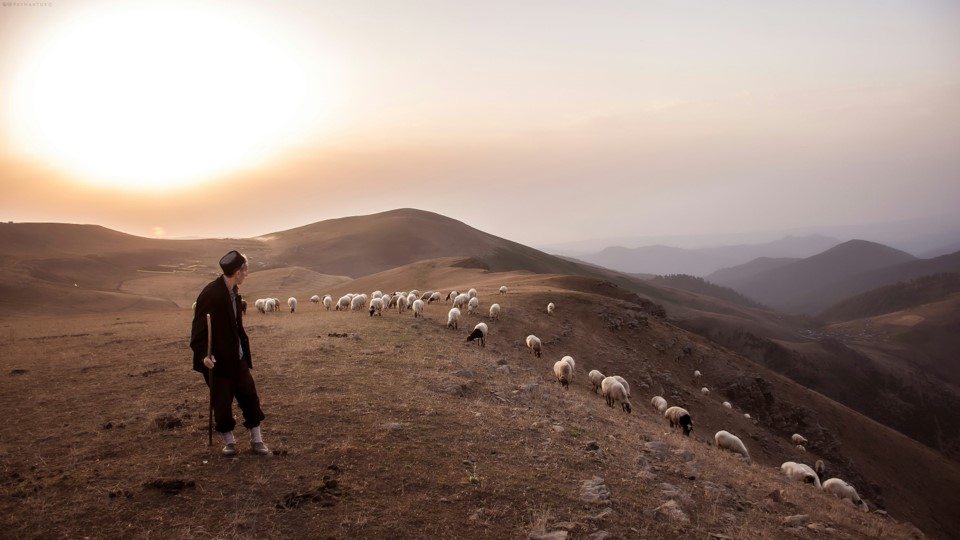
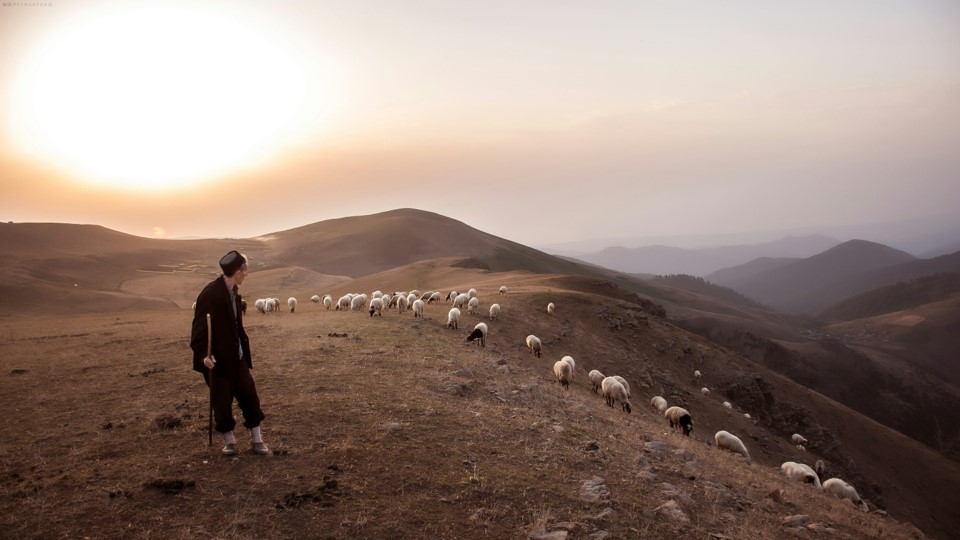
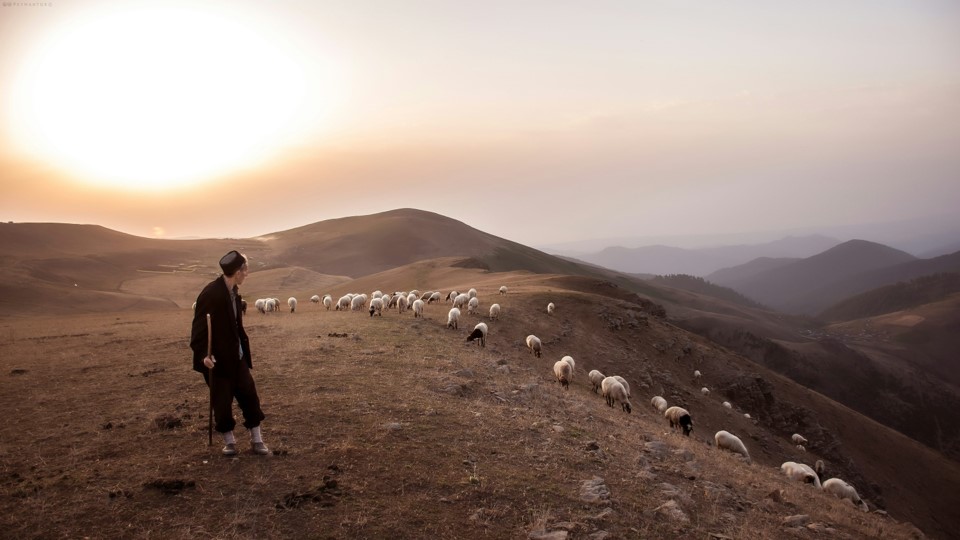
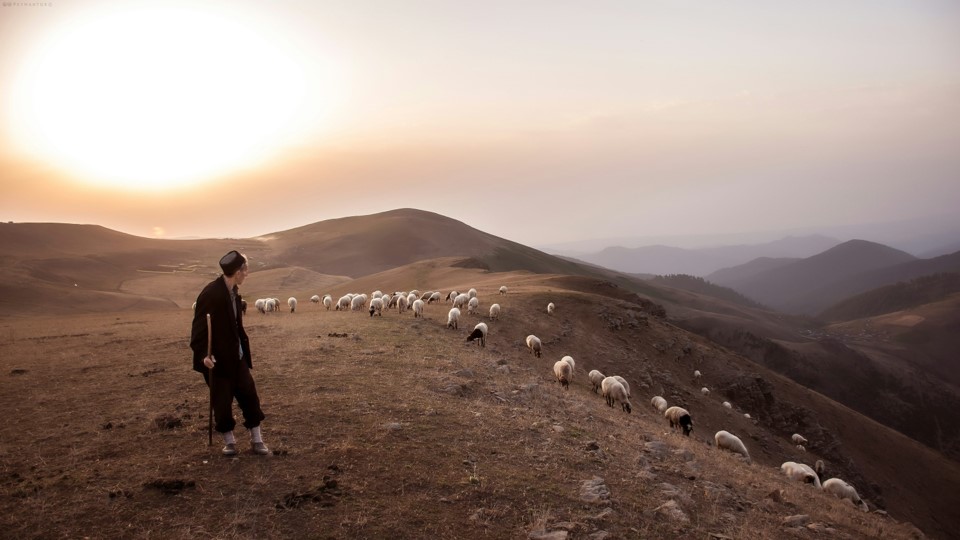
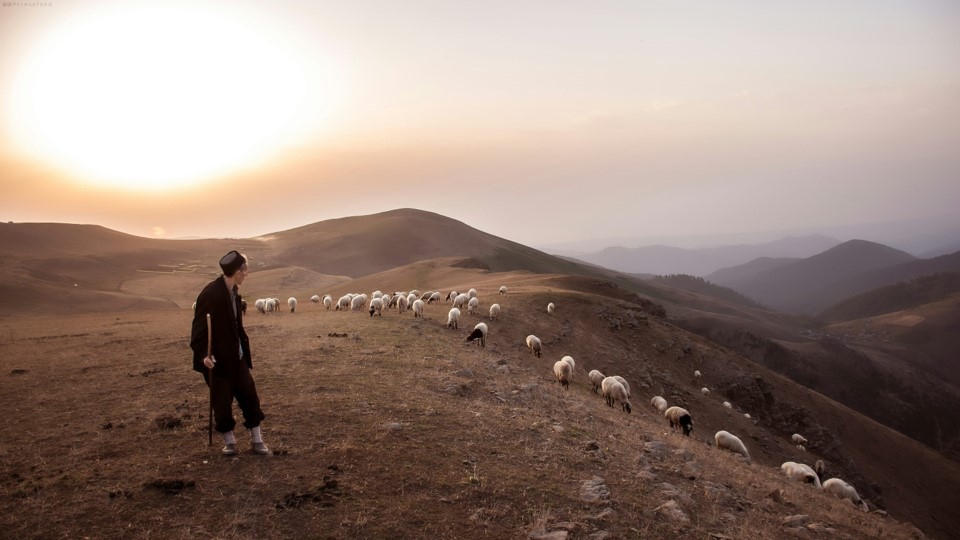
I'm just a shepherd ... But this is what the Lord says
Amos 7:10-17
Structure: Dialogical
Introduction
Opening Frame
There are moments when you want to walk away. When the risk of speaking up feels heavier than the burden of staying silent. When power tells you, “Enough. You don’t belong here.” When you're not sure if you're standing up for the truth, or just making a fool of yourself. That’s where Amos stands.
This wasn’t the plan. He didn’t set out to be a prophet. He didn’t imagine himself confronting priests or standing toe-to-toe with royalty. He was a shepherd. A fig farmer. A man of the southern hills. He knew livestock and seasons and soil, not scrolls or sanctuaries.
But here he is. In Bethel. In the national temple. Being told by Amaziah, the king’s own priest, to leave. And for a moment, a long, aching moment, he almost does.
Amos wrestles with self-doubt
Amos reflects
“What am I doing here?”
The question hums beneath his ribs, low and relentless.
“This isn’t my place. I don’t belong here. I didn’t train for this. I wasn’t called from a school or sent by a council. I didn’t grow up hearing the voice of God like some of them claim to. I was just... tending trees.”
He thinks of Tekoa. The stillness of early morning in the fields. The weight of figs in his hands. The bark of sheep echoing in the valleys. A quiet life. An honest one. He had purpose there. He understood his role. But this?
“I didn’t ask for this. I didn’t want it.”
The memory stings. Amaziah’s voice, thinly veiled with scorn:
‘Go home, seer. Go back to Judah. This is the king’s sanctuary. Not yours.’
And it hurts because it lands close to the bone.
“Maybe he’s right. Who am I to speak like this? What right do I have to say these things, in this place, to these people?”
There’s a weight that settles on him. Heavy with second-guessing. The weight of standing where you were never meant to stand. Of speaking when you’re not sure anyone’s listening, or if they are, they’re already turning your words against you. He can almost feel the urge to leave tugging at him. To take Amaziah’s advice. To slip out the gate, fade into the hills, return to the trees and the sheep and the quiet. To forget the burden that had been pressed into him.
“Let someone else carry this. Someone qualified. Someone people respect. Someone who looks the part.”
He doesn’t feel like a prophet. He feels like an interruption. But then, in the silence of his doubt, another voice surfaces. Steadier. Deeper. One that doesn’t echo from outside, but rises from within. But not his own.
“But I Said, Go.”
God Speaks
“You were in the fields, yes. But I said, Go. You were tending sheep, but I was tending you. You were grafting figs, but I was grafting you into My purpose. You were not trained by men, but I have shaped you with My word. You don’t need a prophet’s name. You bear My sending.”
The words come not to erase his fear, but to reframe it.
He was never chosen because he was confident. He was chosen because he listened. And because, when God said Go, he went.
This had never been about credentials. Not about lineage or reputation. Not about robes or rituals. Just about obedience. And even now, especially now, that’s the only thing that matters.
Amos takes a breath.
He’s still not sure what will happen next. But the silence in his chest has shifted. It isn’t empty anymore. It’s waiting. Waiting for him to speak. Waiting for him to choose what voice to follow, the one that says “Who are you to say this?” Or the one that says “You were sent.”
And maybe, just maybe, that’s what courage actually is.
Not the absence of fear. But the refusal to give it the final word.
Amos anticipates rejection
Amos reflects
The silence doesn't last. It never does.
As soon as courage begins to form, as soon as he dares to believe he might still speak, the doubt returns in a different voice.
Not this time about himself. But about them.
“Even if I say it, they won’t hear me.” He looks back toward the temple courtyard.
Amaziah, the priest, is already gone, back to file his report to the king. But his words still linger. ‘Amos is raising a conspiracy. He says Jeroboam will die by the sword. He says Israel will be exiled.’ That's not what Amos said, not exactly. But it doesn’t matter. The message will travel faster than the truth. And the meaning will be mangled before it reaches any ears that matter.
“They’ll twist my words. They’ll call it rebellion. Treason. Division. They’ll say I’m attacking the king. Stirring up unrest. Making trouble.”
He knows how this works.
He speaks judgment, and they hear slander. He speaks God’s warning, and they hear a political threat. He speaks from heartbreak, and they hear hostility.
“What if it does more harm than good?”
There’s a kind of loneliness only prophets know, when the truth you carry sounds like violence to those you’re trying to rescue.
“They’ll call it unpatriotic. Dangerous. Even evil.”
He can already hear the accusations.
“Who gave you the right to tear us down?”
“Why do you hate your own people?”
“You just want to divide. You’re making things worse.”
And the hardest part? There’s nothing to gain. No protection. No popularity. No reward. Only risk. Only resistance. Only rejection.
“Why say anything at all, if all it brings is anger?”
The temptation creeps in, not to walk away entirely, but to soften the message. Blunt its edge. Wrap it in something warmer.
Maybe he could talk about hope. About peace. About how God loves them, and just leave it there. Maybe if he said it gently enough, vaguely enough, no one would be offended. Maybe even Amaziah would let him stay.
Maybe.
But then, from the edges of his conscience, a firmer voice speaks again. Not louder, but unmistakable.
“You Speak Because I See.”
God Speaks
“You see opposition. But I see injustice. You fear rejection. But I know rebellion. You hear Amaziah’s threats. But I hear the cries of the poor, silenced, crushed, forgotten. You want to protect yourself. But I want to redeem My people.”
The words burn, not in anger, but in urgency.
God is not unaware. Not indifferent. God isn’t speaking judgment out of cruelty, but out of compassion that has run out of places to wait. The silence of injustice has gone on too long. And now someone must speak.
“You speak because I see.”
That sentence lodges deep in Amos’s chest. This isn’t about being heard. It’s about being faithful. It’s not about whether they welcome the message, but whether the message remains undelivered.
Amos shifts on his feet.
This calling is not for his comfort. It never was. It is for a people who have stopped listening. A people who measure prosperity in gold and forget to weigh justice. A people who sing songs of worship but ignore the cries beneath their windows. A people who have kept the festivals and forgotten the Father.
And the wall is leaning now. Crooked. Warped. Hollow behind the plaster. And the plumb line has dropped.
It’s not Amos’s judgment. It’s God’s truth.
“Even if they don’t hear me, they still need to know.”
Amos steps into courage
Amos reflects
He feels it now.
Not a fire of anger. But the weight of mercy.
Mercy that can’t be delayed forever. Mercy that has to be told, even when it hurts. Especially when it hurts.
Amos straightens. The words are forming again. They don’t come easily. But they come.
“I don’t speak because they will listen. I speak because You have spoken. Because Your seeing demands my saying. Because what’s hidden behind the robes and rituals must be exposed.”
“I will say it. Because You see.”
The decision is made quietly. There is no heavenly trumpet. No rending of the sky. Just a shepherd’s breath drawn deep in his chest, and held. Then released.
He looks again toward the temple, not as a tourist anymore, not as a trespasser. Not even as a protester. But as a messenger.
He’s no less afraid than before. But the fear no longer defines him. Because there is a weight greater than fear: the weight of a word entrusted to him. Not a word of his own. Nor born from bitterness or pride. But given. Shown. Pressed into his mouth like coal from the altar.
“So I will say it.”
Not because he wants to. But because he must. Because the voice of God doesn’t just echo in visions, it demands embodiment. And silence, now, would be disobedience.
He replays the words in his head, the vision not yet spoken. The punishment not yet pronounced.
It’s brutal. Harsh. It sounds too much. But he saw it, and once seen, it can’t be unsaid. Not because God enjoys destruction. But because judgment is the last tool love uses when all others have been refused. And Amos knows now, he’s not just speaking to Amaziah. He’s speaking to a people who have long since stopped noticing how far the wall has tilted.
“You wear the garments of priesthood,” Amos thinks toward Amaziah, “but you’ve silenced the voice of God.”
A pause.
Even in his imagination, the weight of it lands hard. He knows what it sounds like: audacious. Arrogant. What kind of fool rebukes a priest? What kind of shepherd speaks over a sanctuary? But again, this isn’t about him. That’s what has changed. This isn’t personal. This is a plumb line.
That vision, the Lord holding a measuring tool beside the wall, it stays with him. He keeps seeing it. Not in the sky, now. But in the nation. In the markets, where scales are tipped. In the courts, where truth is bought. In the worship halls, where gold is offered but hearts are cold. The line is dropping.
And everything is being measured, not against custom, or comfort, or culture, but against God’s own standard. And the wall has bowed.
He lifts his chin. He speaks, not in shouts, but in declaration. Steady. Clear. Not for argument. Not for applause. But for witness.
“This is what the Lord says.”
That’s it.
That’s all.
Not: “This is what I think.”
Not: “This is what I’ve figured out.”
But: “This is what I’ve been given.”
The courage comes not from being certain he’ll be safe, but from being certain of who sent him. And he knows now, the confrontation was never the danger. The danger was silence. The danger was backing down when God had already stepped in.
He exhales again, this time not in fear, but in release. The words are no longer stuck. They have done their work.
He’s still just a shepherd. Still just a worker of sycamore trees. But now he is more. Not because he changed careers. But because he said yes.
He turns from the temple. He has said what needed to be said. The future still waits in tension. But the message has landed. And the wall will not stand much longer.
From shepherd’s courage to our own calling
Final Reflection
And that’s where we find ourselves.
Sometimes we’re Amos, trembling before power, wondering if we’re qualified, wondering if our voice matters.
Sometimes we’re Amaziah, defending tradition, dismissing challenge, silencing what unsettles.
And sometimes we’re Israel, comfortable, confident, completely unaware the wall behind us is starting to lean.
But the plumb line still drops. God still speaks. And someone, someone, still has to say, “This is what the Lord says.”
So let’s not leave this story as something locked in the past.
Because the dynamics Amos wrestled with, fear, resistance, calling, courage, they haven’t gone anywhere. We still know what it is to feel out of place. To feel unqualified. To hear a word burning in our hearts but wonder, “Who am I to say this?”
We still live in a world where power doesn’t want to be disrupted. Where voices that challenge the status quo are told, “Go home.” Where speaking God’s truth is costly, not only in public, but sometimes in our own homes, our families, our churches.
And yet… The plumb line still drops. God still holds up the measure.
And the question isn’t: Are you worthy to speak?
The question is: Will you be faithful with what you’ve been shown?
Let me ask you:
-
Where is God placing a word on your heart that you’re afraid to say?
-
Is it a challenge you know someone needs to hear? A truth that’s been ignored too long? A quiet prompting you’ve tried to reason away?
-
Where are you being told to “go home”, in the literal or metaphorical sense, and how are you responding?
-
Are you retreating when God’s calling you to stand firm? Are you giving power the final word, instead of the Spirit?
-
Are you measuring your faithfulness by people’s approval or by God’s plumb line?
-
Because the wall may still look strong. The temple might still be standing. But God is measuring hearts, and truth always outlasts performance.
-
And let me ask this too:
-
Is there someone whose voice you’ve silenced?
-
Maybe they didn’t come from the “right background.”
-
Maybe what they said felt too hard.
-
Maybe, like Amaziah, we dismissed the person to avoid facing the truth.
-
If so, it’s not too late. God’s plumb line isn’t just a tool of judgment. It’s also an invitation to realignment.
Amos didn’t want to be a prophet. He wasn’t trying to start a movement. But when God said, “Go,” he went. When God said, “Speak,” he spoke. And that courage, quiet, reluctant, obedient courage, is still what God uses today.
Not bluster. Not ego. Just people who are willing to say: “This is what the Lord says.”
Even if their voice shakes.
Even if they’re just a shepherd.
Even if it’s you.